
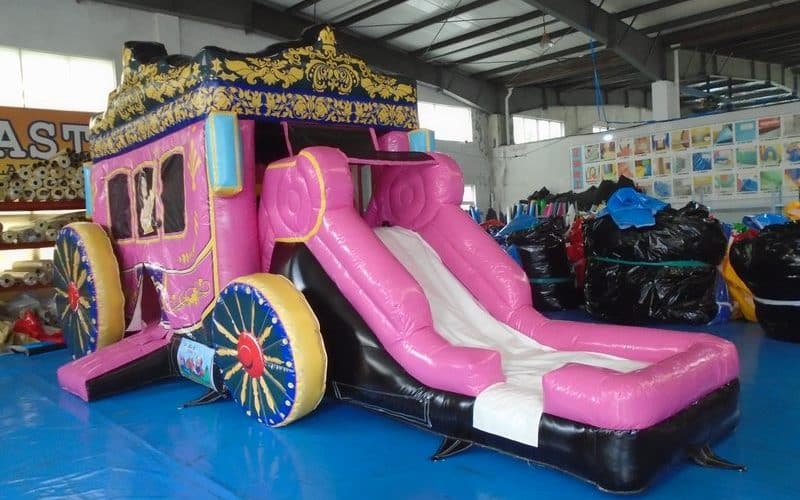
At first glance, bigger bounce houses seem like the obvious choice for rental businesses. They look impressive, accommodate more children, and often command higher rental prices. But does bigger really mean more profit? The answer is more nuanced than many operators expect.
In reality, revenue and profitability are not the same thing, and size plays a complex role in both.
The Appeal of Bigger Bounce Houses
Larger bounce houses naturally attract attention. Parents, event organizers, and even schools often associate size with value. A bigger unit feels more “special,” especially at festivals, school fairs, and large community events.
From a marketing perspective, larger inflatables:
- Stand out in photos and online listings
- Appear suitable for older children
- Can justify higher single-event pricing
This initial appeal is why many rental businesses consider upgrading to bigger units early on.
Higher Rental Price Does Not Always Mean Higher Profit
While larger bounce houses may rent for more per event, they also come with higher operating costs. These costs are often overlooked during the purchasing decision.
Common cost increases include:
- Larger transport vehicles
- Additional setup staff
- Longer setup and teardown times
- Increased storage space
- Higher maintenance and repair expenses
When these factors are considered, the profit margin per event may not scale proportionally with size.
Utilization Rate: The Hidden Profit Driver
One of the most important metrics in rental profitability is utilization rate — how often a unit is booked.
Medium-sized bounce houses tend to:
- Fit more residential backyards
- Meet indoor height restrictions
- Be accepted by a wider range of venues
As a result, they are often rented more frequently throughout the year.
A larger bounce house may generate more revenue per booking, but if it sits idle due to space constraints or limited demand, its overall annual income can fall behind smaller, more versatile units.
Venue Limitations Matter More Than Expected
Many rental businesses discover after purchase that large bounce houses are incompatible with common venues. Backyard parties, which make up a significant portion of bookings, often have limited space. Similarly, indoor venues such as school halls and community centers frequently impose height and footprint restrictions.
When a unit cannot fit a venue:
- The booking is lost entirely
- The operator must offer a replacement
- Customer satisfaction may suffer
In contrast, standard-sized bounce houses face fewer placement issues, making them easier to rent consistently.
Setup Time and Labor Costs Add Up
Large bounce houses typically require more time and manpower to install safely. This impacts daily operations in subtle but meaningful ways:
- Fewer events can be serviced in a single day
- Labor costs increase per booking
- Scheduling becomes less flexible
For rental companies operating with small teams, these constraints can significantly limit growth.
Maintenance and Wear Considerations
Bigger units experience greater stress due to:
- Higher internal air pressure
- Increased surface area
- More simultaneous users
Over time, this can lead to:
- Faster wear at seams and anchor points
- More frequent repairs
- Higher downtime
While commercial-grade construction mitigates these risks, maintenance costs still tend to rise with size.
When Bigger Bounce Houses Do Make Sense
Despite the challenges, larger bounce houses can be profitable in the right context. They perform best when:
- The business specializes in large-scale events
- Venues are predictable and spacious
- Higher staffing levels are already in place
- The rental price premium is consistent and reliable
For companies focused on festivals, corporate events, or school fairs, larger units can become valuable flagship products.
A Balanced Inventory Often Wins
Experienced rental operators often adopt a mixed strategy:
- Core inventory of standard-sized bounce houses for consistent bookings
- A small number of larger units for premium events
This approach balances steady cash flow with occasional high-revenue opportunities, without overexposing the business to size-related limitations.
The Real Question: Consistency vs Impression
Ultimately, the most profitable bounce house is not the biggest one — it is the one that:
- Fits the widest range of venues
- Requires manageable setup effort
- Delivers reliable bookings week after week
Bigger bounce houses can make more money per event, but smaller, versatile units often make more money over time due to higher utilization and lower operating friction.
Final Thoughts
Bigger bounce houses do not automatically translate into higher profits. Size should be evaluated alongside demand patterns, venue constraints, labor capacity, and long-term maintenance costs.
For rental businesses focused on sustainable growth, consistency usually outperforms spectacle. Choosing the right size is less about visual impact and more about how often the unit works for your business.