
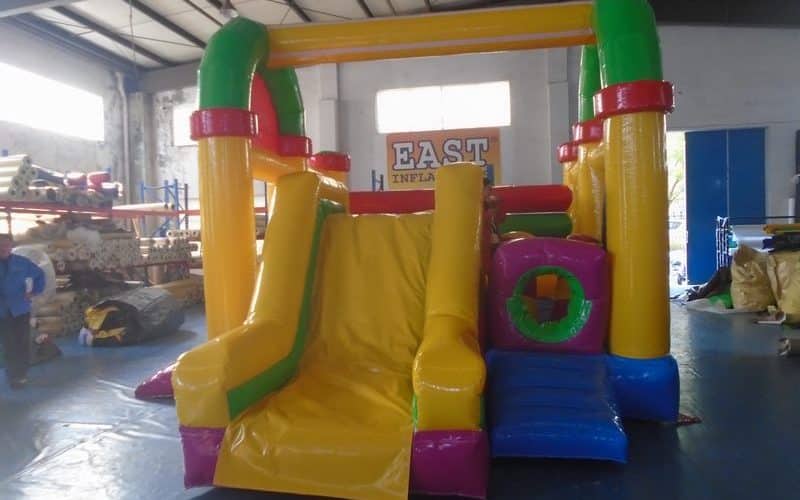
If you’ve ever unrolled a brand-new, budget-priced inflatable and been hit by a sharp, “plastic” chemical smell, you aren’t alone. While all PVC products have a slight scent when first opened, a heavy, overwhelming odor is often a red flag regarding the materials and manufacturing processes used.
In the commercial inflatable industry, that smell is usually a sign of cost-cutting measures that could affect the longevity of your equipment and the comfort of your guests.
1. The Use of “Non-Premium” Plasticizers
PVC (Polyvinyl Chloride) is naturally a rigid plastic. To make it flexible enough to become a bouncy castle, manufacturers add plasticizers.
- The High-End Way: Premium manufacturers use high-quality, stable plasticizers that are bonded deeply within the vinyl.
- The Budget Way: Cheap factories often use low-grade, unstable oils or phthalates to soften the fabric. These cheaper chemicals “off-gas” much more aggressively, creating that pungent, oily scent that can linger for weeks.
2. Solvent-Based Glues and Inks
The odor isn’t always from the fabric itself; it often comes from the assembly process.
- The Ink Factor: Cheap units often use high-solvent silk screen printing for their graphics. These inks release strong vapors as they cure.
- The Glue Factor: While many commercial units are heat-welded, smaller details are often attached using heavy-duty glues. Budget-grade adhesives are high in VOCs (Volatile Organic Compounds), which contribute to that “new car smell” on steroids.
3. Recycled Material Contamination
To keep prices at rock bottom, some factories use recycled PVC scraps. Because these scraps come from various sources, they may contain traces of older, banned chemicals or lead-based stabilizers that have a much stronger chemical signature than virgin, medical-grade, or lead-free 0.55mm PVC.
In the U.S., choosing equipment that is certified Lead-Free and Flame Retardant is essential to avoid these low-grade material risks.
4. Trapped Vapors in Storage
Most cheap inflatables are manufactured, tightly rolled, and shrink-wrapped almost immediately to be shipped across the ocean in hot containers.
- When the vinyl is packed while the inks or glues are still “gassing off,” the vapors become trapped inside the folds.
- By the time the unit reaches a backyard in the States, the concentration of these odors is at its peak.
5. How to Tell if the Odor is Dangerous
A slight “new vinyl” smell that dissipates after an hour of inflation is normal. However, you should be concerned if:
- The smell persists: If the unit still stinks after 48 hours of being inflated outdoors, the chemicals are unstable.
- Oily Residue: If the vinyl feels “slimy” or leaves a residue on your hands, the plasticizers are leaching out.
- Physical Symptoms: If children complain of headaches or watery eyes, the VOC levels are likely too high.
Summary: Quality Doesn’t Stink
When you invest in professional-grade equipment, you are paying for Virgin 18oz PVC and high-stability components. Choosing a supplier that prioritizes U.S. safety compliance and uses low-VOC materials ensures that the only thing your customers notice at a party is the fun—not a distracting chemical cloud.